


What I’ll be saying on the TechTalks stage at GITEX Berlin – Duplicate 3
admin June 10, 2026 7:06 am In late June I’m presenting at GITEX Europe Berlin during the UK Innovation Hour. The talk is forty minutes; this is the five-minute version. If it lands, come and find me at the UK Innovation stand on either day. Mark Dixon Business Development Lead, W3Partnership · ex-CIO (Standard Life, Direct Line, Barclays) · ex-Partner, IBM Business Consulting Services The session at a glance Why iPaaS++ is Different. Faster, lower TCO, client-first integration.Event: GITEX Europe Berlin 2026Stage: TechTalks · UK Innovation HourDates: 30 June – 1 July 2026Venue: Messe Berlin The honest reason this talk exists I’ve spent my career on both sides of the integration table. As CIO at Standard Life, Direct Line and Barclays I signed the cheques and lived with the consequences. Earlier, as a Partner at IBM Business Consulting Services, I led some of the engagements that delivered them. Two views of the same problem — and the same conclusion at the end of both. Enterprise integration is a solved engineering problem. It is not a solved commercial one. That’s what the talk is about, and it’s why W3Partnership built iPaaS++ in the first place. Three reasons iPaaS programmes fail Our founders started W3 Partnership in 2007 after watching the same three failure patterns play out across project after project. They built iPaaS++ in 2017 to fix each one. Too slow. Twelve- to eighteen-month implementations are still the norm. By the time you’ve got value, the business case has moved on. Too expensive. A six-figure upfront licence. Expensive certified specialists you have to hire or train. Then an annual maintenance bill that turns up every year for the rest of time. Wrong incentives. Most iPaaS vendors are sold the way the vendor (and the PE house behind them) wants them sold — not the way that’s right for the client. Five things we say that our competitors can’t The substance of the talk is five differentiators. They matter individually. Together they change the economics of integration. 1. Two to four times fasterFirst live integration in 6–8 weeks. Full integration estate live in 3–4 months. A traditional iPaaS implementation runs 12–18 months to the same point. We deliver in a fraction of the typical timeline because we don’t ask the client to learn the platform — our team has done it on every prior engagement. 2. Certainty, soonerSpeed isn’t just about time saved. It’s about confidence. Clients see working integrations in weeks, not a 12-month plan and a prayer. Short delivery cycles are predictable; long ones aren’t. Business cases stop drifting. 3. Lower total cost of ownershipNo upfront licence. No certified-specialists payroll. No professional-services bill. We charge a monthly subscription that starts when the service is live in production — not when you sign. Aligned incentives, not extracted ones. 4. UK Government approvedPublic-sector-grade assurance is unusual in this market. We’ve been a UK Government approved supplier since 2014. ISO 27001 and 9001. Cyber Essentials. If we can meet that bar, we can meet yours — and these are independently audited, not marketing claims. 5. Client-first by designWe are privately held. No PE owner driving revenue at any cost. Every employee is an iPaaS practitioner — we don’t employ content-free salespeople. And if iPaaS++ isn’t right for you, we won’t sell it. There are three scenarios in our public materials where we recommend other platforms over our own; that level of honesty is the only durable form of trust in this market. The structural reason we can deliver faster The single biggest difference between iPaaS++ and a traditional iPaaS is what the client never has to do. You don’t buy software. You don’t hire or train certified specialists. You don’t maintain a niche skill set after go-live. You don’t pay a separate professional-services partner. You don’t become an iPaaS shop to get integrations your business needs. We do all of that. End to end. As a black box. That’s the structural reason 6–8 weeks is achievable. “iPaaS is flat-pack furniture and a toolbox. iPaaS++ is pre-assembled, quality furniture.” — A W3 Partnership client A note on AI Yes, we use AI. It accelerates connector generation and test creation. But our experts grandfather everything the AI produces — every line is reviewed before it ships. The “low-code / no-code” pitch you’ll hear elsewhere in Berlin pushes that review work back to the client. Most clients don’t have the skills to debug AI-generated integration logic — which is precisely why they hired an iPaaS vendor in the first place. We don’t expect you to spot when the AI is wrong. We do that for you. If this resonates, come and say hello I’ll be at GITEX Europe Berlin for both days, primarily on the UK Innovation stand. If a single thing in this preview has caught your attention — the speed claim, the commercial model, the client-first stance, the credentials — please come and find me. I’d rather have a real conversation than push a deck at you. If you can’t make Berlin, the easiest next step is a 30-minute call. We listen first; no scripted demo, no hard sell. Book a meeting at GITEX Berlin Read the white paper Previous Post
What I’ll be saying on the TechTalks stage at GITEX Berlin – Duplicate 2
admin June 10, 2026 4:36 am In late June I’m presenting at GITEX Europe Berlin during the UK Innovation Hour. The talk is forty minutes; this is the five-minute version. If it lands, come and find me at the UK Innovation stand on either day. Mark Dixon Business Development Lead, W3Partnership · ex-CIO (Standard Life, Direct Line, Barclays) · ex-Partner, IBM Business Consulting Services The session at a glance Why iPaaS++ is Different. Faster, lower TCO, client-first integration.Event: GITEX Europe Berlin 2026Stage: TechTalks · UK Innovation HourDates: 30 June – 1 July 2026Venue: Messe Berlin The honest reason this talk exists I’ve spent my career on both sides of the integration table. As CIO at Standard Life, Direct Line and Barclays I signed the cheques and lived with the consequences. Earlier, as a Partner at IBM Business Consulting Services, I led some of the engagements that delivered them. Two views of the same problem — and the same conclusion at the end of both. Enterprise integration is a solved engineering problem. It is not a solved commercial one. That’s what the talk is about, and it’s why W3Partnership built iPaaS++ in the first place. Three reasons iPaaS programmes fail Our co-founders, Graham Woods and Hunmbal Khan, started W3Partnership in 2007 after watching the same three failure patterns play out across project after project. They built iPaaS++ in 2017 to fix each one. Too slow. Twelve- to eighteen-month implementations are still the norm. By the time you’ve got value, the business case has moved on. Too expensive. A six-figure upfront licence. Expensive certified specialists you have to hire or train. Then an annual maintenance bill that turns up every year for the rest of time. Wrong incentives. Most iPaaS vendors are sold the way the vendor (and the PE house behind them) wants them sold — not the way that’s right for the client. Five things we say that our competitors can’t The substance of the talk is five differentiators. They matter individually. Together they change the economics of integration. 1. Two to four times fasterFirst live integration in 6–8 weeks. Full integration estate live in 3–4 months. A traditional iPaaS implementation runs 12–18 months to the same point. We deliver in a fraction of the typical timeline because we don’t ask the client to learn the platform — our team has done it on every prior engagement. 2. Certainty, soonerSpeed isn’t just about time saved. It’s about confidence. Clients see working integrations in weeks, not a 12-month plan and a prayer. Short delivery cycles are predictable; long ones aren’t. Business cases stop drifting. 3. Lower total cost of ownershipNo upfront licence. No certified-specialists payroll. No professional-services bill. We charge a monthly subscription that starts when the service is live in production — not when you sign. Aligned incentives, not extracted ones. 4. UK Government approvedPublic-sector-grade assurance is unusual in this market. We’ve been a UK Government approved supplier since 2014. ISO 27001 and 9001. Cyber Essentials. If we can meet that bar, we can meet yours — and these are independently audited, not marketing claims. 5. Client-first by designWe are privately held. No PE owner driving revenue at any cost. Every employee is an iPaaS practitioner — we don’t employ content-free salespeople. And if iPaaS++ isn’t right for you, we won’t sell it. There are three scenarios in our public materials where we recommend other platforms over our own; that level of honesty is the only durable form of trust in this market. The structural reason we can deliver faster The single biggest difference between iPaaS++ and a traditional iPaaS is what the client never has to do. You don’t buy software. You don’t hire or train certified specialists. You don’t maintain a niche skill set after go-live. You don’t pay a separate professional-services partner. You don’t become an iPaaS shop to get integrations your business needs. We do all of that. End to end. As a black box. That’s the structural reason 6–8 weeks is achievable. “iPaaS is flat-pack furniture and a toolbox. iPaaS++ is pre-assembled, quality furniture.” — A W3Partnership client A note on AI Yes, we use AI. It accelerates connector generation and test creation. But our experts grandfather everything the AI produces — every line is reviewed before it ships. The “low-code / no-code” pitch you’ll hear elsewhere in Berlin pushes that review work back to the client. Most clients don’t have the skills to debug AI-generated integration logic — which is precisely why they hired an iPaaS vendor in the first place. We don’t expect you to spot when the AI is wrong. We do that for you. If this resonates, come and say hello I’ll be at GITEX Europe Berlin for both days, primarily on the UK Innovation stand. If a single thing in this preview has caught your attention — the speed claim, the commercial model, the client-first stance, the credentials — please come and find me. I’d rather have a real conversation than push a deck at you. If you can’t make Berlin, the easiest next step is a 30-minute call. We listen first; no scripted demo, no hard sell. Book a meeting at GITEX Berlin Read the white paper Previous Post
What I’ll be saying on the TechTalks stage at GITEX Berlin
June 10, 2026 In late June I’m presenting at GITEX Europe Berlin during the UK Innovation Hour. The talk is forty minutes; this is the five-minute version. If it lands, come and find me at the UK Innovation stand on either day. Mark Dixon Business Development Lead, W3Partnership · ex-CIO (Standard Life, Direct Line, Barclays) · ex-Partner, IBM Business Consulting Services The session at a glance Why iPaaS++ is Different. Faster, lower TCO, client-first integration.Event: GITEX Europe Berlin 2026Stage: TechTalks · UK Innovation HourDates: 30 June – 1 July 2026Venue: Messe Berlin The honest reason this talk exists I’ve spent my career on both sides of the integration table. As CIO at Standard Life, Direct Line and Barclays I signed the cheques and lived with the consequences. Earlier, as a Partner at IBM Business Consulting Services, I led some of the engagements that delivered them. Two views of the same problem — and the same conclusion at the end of both. Enterprise integration is a solved engineering problem. It is not a solved commercial one. That’s what the talk is about, and it’s why W3Partnership built iPaaS++ in the first place. Three reasons iPaaS programmes fail Our co-founders, Graham Woods and Hunmbal Khan, started W3Partnership in 2007 after watching the same three failure patterns play out across project after project. They built iPaaS++ in 2017 to fix each one. Too slow. Twelve- to eighteen-month implementations are still the norm. By the time you’ve got value, the business case has moved on. Too expensive. A six-figure upfront licence. Expensive certified specialists you have to hire or train. Then an annual maintenance bill that turns up every year for the rest of time. Wrong incentives. Most iPaaS vendors are sold the way the vendor (and the PE house behind them) wants them sold — not the way that’s right for the client. Five things we say that our competitors can’t The substance of the talk is five differentiators. They matter individually. Together they change the economics of integration. 1. Two to four times fasterFirst live integration in 6–8 weeks. Full integration estate live in 3–4 months. A traditional iPaaS implementation runs 12–18 months to the same point. We deliver in a fraction of the typical timeline because we don’t ask the client to learn the platform — our team has done it on every prior engagement. 2. Certainty, soonerSpeed isn’t just about time saved. It’s about confidence. Clients see working integrations in weeks, not a 12-month plan and a prayer. Short delivery cycles are predictable; long ones aren’t. Business cases stop drifting. 3. Lower total cost of ownershipNo upfront licence. No certified-specialists payroll. No professional-services bill. We charge a monthly subscription that starts when the service is live in production — not when you sign. Aligned incentives, not extracted ones. 4. UK Government approvedPublic-sector-grade assurance is unusual in this market. We’ve been a UK Government approved supplier since 2014. ISO 27001 and 9001. Cyber Essentials. If we can meet that bar, we can meet yours — and these are independently audited, not marketing claims. 5. Client-first by designWe are privately held. No PE owner driving revenue at any cost. Every employee is an iPaaS practitioner — we don’t employ content-free salespeople. And if iPaaS++ isn’t right for you, we won’t sell it. There are three scenarios in our public materials where we recommend other platforms over our own; that level of honesty is the only durable form of trust in this market. The structural reason we can deliver faster The single biggest difference between iPaaS++ and a traditional iPaaS is what the client never has to do. You don’t buy software. You don’t hire or train certified specialists. You don’t maintain a niche skill set after go-live. You don’t pay a separate professional-services partner. You don’t become an iPaaS shop to get integrations your business needs. We do all of that. End to end. As a black box. That’s the structural reason 6–8 weeks is achievable. “iPaaS is flat-pack furniture and a toolbox. iPaaS++ is pre-assembled, quality furniture.” — A W3Partnership client A note on AI Yes, we use AI. It accelerates connector generation and test creation. But our experts grandfather everything the AI produces — every line is reviewed before it ships. The “low-code / no-code” pitch you’ll hear elsewhere in Berlin pushes that review work back to the client. Most clients don’t have the skills to debug AI-generated integration logic — which is precisely why they hired an iPaaS vendor in the first place. We don’t expect you to spot when the AI is wrong. We do that for you. If this resonates, come and say hello I’ll be at GITEX Europe Berlin for both days, primarily on the UK Innovation stand. If a single thing in this preview has caught your attention — the speed claim, the commercial model, the client-first stance, the credentials — please come and find me. I’d rather have a real conversation than push a deck at you. If you can’t make Berlin, the easiest next step is a 30-minute call. We listen first; no scripted demo, no hard sell. Book a meeting at GITEX Berlin Read the white paper Previous PostNext Post
Integrating with Apache Kafka Using Smarter Integration from W3 Partnership Ltd

Integrating with Apache Kafka Using Smarter Integration from W3 Partnership Ltd In today’s fast-moving digital landscape, organisations need robust data pipelines and real-time connectivity between systems to stay competitive. Apache Kafka — the industry-leading event streaming platform — underpins many modern architectures by enabling scalable, fault-tolerant, real-time data flows. But integrating Kafka effectively with your wider ecosystem can be challenging without the right platform and expertise. That’s where Smarter Integration from W3 Partnership Ltd comes in. Smarter Integration is an Integration Connectivity as a Service (iCaaS) solution designed to simplify how businesses connect disparate applications, services, and data sources — whether on-premises, in the cloud, or across hybrid environments. Unlike traditional integration platforms that often require significant development effort or complex middleware, Smarter Integration delivers rapid implementation (often in as little as 48 hours) using pre-configured patterns and reusable assets to accelerate outcomes. When integrating with Apache Kafka, Smarter Integration can play a crucial role in acting as the connective tissue between Kafka’s event streams and your organisation’s wider systems ecosystem. Kafka excels at handling streams of events (messages) with high throughput and low latency, making it ideal for real-time analytics, microservices communication, and event-driven workloads. However, getting data in and out of Kafka — and synchronising it with existing applications — typically requires connectors, custom code, or integration layers. Smarter Integration uses prebuilt connectors and integration patterns that help you produce and consume data from Kafka topics, automate message flows between Kafka and target systems (such as databases, APIs, and legacy applications), and ensure consistent, resilient data movement without reinventing the wheel each time. The platform’s cloud-ready architecture means you can deploy these integrations quickly in AWS or other cloud platforms, with managed monitoring, error handling, and transformation logic built-in. For organisations embracing event-driven design or real-time analytics, combining Kafka’s stream processing capabilities with Smarter Integration’s managed approach delivers greater agility and lower operational overhead. Whether you’re flowing data into analytics tools, syncing event streams with core business applications, or transforming messages on the fly, this approach streamlines your integration efforts while maintaining scalability. Moreover, Smarter Integration supports a wide range of protocols and integration needs — from REST and SOAP APIs to file-based interchange, message queues, and more — so Kafka can sit harmoniously within your broader digital ecosystem without becoming an isolated component. In short, integrating Apache Kafka with Smarter Integration from W3 Partnership Ltd allows businesses to harness the power of real-time data streams while minimising complexity, reducing time to value, and building a flexible integration foundation for the future. Find out more by contacting our team. Previous PostNext Post
iPaaS++ vs iPaaS
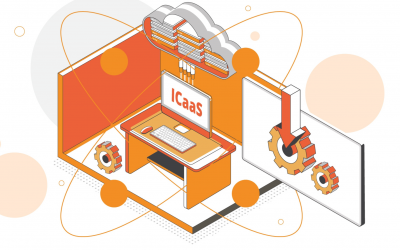
iPaaS++ vs iPaaS integration Platform as a Service (iPaaS) and integration Platform as a Service ++ (iPaaS++) sound pretty similar, but in reality, how similar are they? We’re here to tell you why our product iPaaS++ has superior advantages. Is iPaaS++ quicker to develop? iPaaS++ has a ready-to-use design, coming with pre-built high availability and auto-scalability rules. Security design is already in place, ensuring a robust framework from the start. On the other hand, iPaaS has complex environment considerations. First the number of environments needed, and their specifications for high availability and sizing needs to be determined. Is the setup for iPaaS++ easier? With iPaaS++, there is a swift environment setup. Integration environments are built rapidly, bringing you just hours away from utilizing your integration capability. In comparison, with iPaaS you will face deployment hurdles, and questions when it comes to where iPaaS should be deployed for planned workloads. iPaaS++ also has a ready-to-use design. It coms with a pre-built high availability and auto-scalability rules. Security design is already in place, ensuring a robust framework from the start. With iPaaS, you will have to plan the approach for developing, testing, and deploying integration services or APIs. You will need to consider handling exceptions, logging strategies, and the implementation of authorization and authentication for end-users. The iPaaS++ Advantage All these factors are pre-configured, eliminating the need for further consideration. Your integration platform is ready within days, bypassing the lengthy project associated with iPaaS implementations. In summary, iPaaS++ is the natural and intelligent extension to iPaaS, providing you with a hassle-free journey to seamless integration capabilities. With iCaaS: A customer can be up and running within days, improving ROI hugely. No customer expertise required, meaning less cost and more certainty of delivery. Overall cost up to 70% less than comparable iPaaS offering. Previous PostNext Post
G-Cloud 14 is live! And we’re proud to be a supplier

The Cabinet Office has announced the latest iteration of G-Cloud is now live and available to support public sector bodies in sourcing cloud solutions. With over 4,000 suppliers, W3 Partnership are delighted to have been awarded a place on the G-Cloud framework for the fifth year running. The agreement enables Central Government, NHS Trusts and other public sector bodies to purchase cloud-based services from a single website. W3 Partnership were awarded the position based on their innovative cloud-based integration solutions. Providing first-class connectivity services whilst providing large cost savings and reducing the risks associated with implementing an integration layer needed to make public sector bodies more efficient. “We are pleased our application has been successful again in securing a place on G-Cloud 14. Our iPaaS++ offering is an ideal solution to support the public sector in implementing connectivity to drive value and we are thrilled to have already supported multiple public sector clients in meeting their connectivity objectives” . Lead Architect at a Public Sector Organisation, explains “We are a small public sector team, lacking significant resources, and it’s our strategy to go cloud first – so we have that scalability, resilience and reliability. iPaaS++ based Smarter Integration very much fits into the model we wanted to adopt. We were able to deploy without having that big lump sum to pay up front – saving at least 70% in comparison with other potential suppliers, possibly more. This is money we’ve been able to reallocate to the digital front-end and other options for device refreshment. I don’t ever like to use the word ‘no-brainer’ but if I was to ever use it then, from a cost perspective, it would be appropriate.” G-Cloud is quick and easy to use, however if you are unfamiliar or want to learn more about how Smarter Integration can support your cloud-first connectivity requirements, get in touch now. Previous PostNext Post
Hybrid Integration – An Ideal Partner for the Cloud Migration Journey

The need for integrated IT systems is no longer in question. Modern organisations rely on data to drive operational and strategic decisions, but it’s not possible to use this data effectively if it’s sitting in silos. Therefore, once an enterprise has decided to integrate, the next question is: how? Answering the “how” question depends on existing IT systems architecture, the stage of the cloud migration journey, and understanding the different integration solutions that can be applied. Cloud Coverage Research from the Cloud Industry Forum provides some insights into the state of cloud adoption in the UK. According to the research, which covers small, medium, and large enterprises as well as public sector organisations, 88 per cent have already implemented cloud technology to some extent. However, only eight per cent are operating entirely in the cloud, while 54 per cent aims to move to a fully cloud-based system landscape in the future. When looking at the integration approach, the organisation needs to assess to what extent it’s already operating in the cloud. A fully cloud-based IT architecture only needs a cloud-based integration solution. On the other hand, if an organisation hasn’t yet started any cloud migration activities, then an on-premise integration platform is a more appropriate solution. A hybrid integration approach is best suited to those organisations which are currently operating a hybrid IT landscape comprising both cloud-based and on-premise systems. A hybrid approach means that organisations don’t have to delay integration until their cloud migration is completed. They can operate an integration platform that connects their legacy on-premise systems, and a cloud-based integration service for their cloud infrastructure and applications. Advantages of a Hybrid Integration Approach The research previously mentioned also outlines the reasons that organisations are moving into the cloud. These include flexibility of delivery, scalability, operational cost savings, and competitive edge. However, the speed of migrating all IT architecture to the cloud has a direct relationship with the size of the organisation attempting to do so. Larger organisations naturally move at a slower pace, because the work involved in migration is that much more significant, whereas smaller enterprises tend to be more agile. Furthermore, many companies or public sector bodies may make a conscious decision to host specific systems or data on-premise. This may result from concerns about the security of sensitive data being hosted in the cloud. It may simply be a case of “if it ain’t broke, don’t fix it” where a legacy system is still fit for purpose. Either way, a hybrid approach enables the company to achieve full systems integration without having to wait until the cloud migration journey is complete. Furthermore, such an approach allows the organisation to leverage many of the same benefits that a cloud migration also aims to achieve. Considerations for a Hybrid Integration There are various factors to consider when implementing a hybrid integration. Time and cost are always two of the most significant. Depending on the systems landscape and the chosen platform(s), it may be necessary to bring in external support. While this adds expertise, it can take more time on discovery. Furthermore, ongoing running costs will also be a consideration. Ideally, your chosen solution won’t involve hiring in-house experts to maintain the integration solution once implementation is complete. Moreover, the optimal integration solution will empower the business to perform more of its own integrations, reducing the reliance on IT resources. Any solution should be able to handle the complexity of your systems landscape. Not all platforms will necessarily support all systems and databases. Therefore, there will need to be a matching exercise. If the integration solution doesn’t support some legacy systems, there may be further business decisions to prioritise those for cloud migration sooner rather than later. On a similar note, the hybrid integration solution needs to be as future-proof as possible. If you plan to continue future cloud migration activities, then the chosen integration approach should be flexible enough to accommodate this without extensive further implementation work. Similarly, if you have ongoing cloud migration activities planned, these should be factored into the hybrid integration implementation too. Security is another factor to consider. Integrating involves introducing new connectors between systems. Integration providers should be able to offer security guarantees, avoiding the introduction of new points of weakness into the systems architecture. Contact us for more information. Previous PostNext Post
Cloud Security 101: Keeping Your Enterprise Data Safe in the Cloud

Cybercrimes are one of the biggest threats to the bottom line. Research from Accenture shows that the average cost of cybercrime to an organisation grew to $13m (£9.9m) in 2019, with the number of security breaches increasing by 67% over the last five years. Moving from on-premise to cloud means handing over some degree of control of your enterprise data. As such, you may have less control over the cybersecurity risks. As cloud services become increasingly prevalent, it’s easy for the roles and responsibilities around data protection and security to become muddied. But this doesn’t necessarily mean that cloud is inherently more dangerous, or that your provider is solely responsible for your cloud-hosted data and applications. It just means that organisations may need to take a different approach to cybersecurity. This article provides some general tips and watch-outs that will help when considering the best ways to ensure data security in the cloud. Understand How Data is Secured If you’re using a public cloud or a private cloud via a provider, then establish how your provider is securing your data. Cloud providers will use a combination of security measures which may include any of the following: Firewalls – these may be simple, only checking the source and destination of data, or more advanced, examining the data itself Event logs – generally used by security analysts to detect threats, but if there is a breach, event logs can also help trace the source Intruder detection – basic detectors will flag when someone attempts to brute-force a password while more advanced ones will offer multi-level detection in case an attacker manages to breach the initial boundaries Physical security – certified data centres offer full physical protection including measures such as human guard patrols, 24-hour surveillance, and biometric locks Encryption – cloud providers generally encrypt data so even if it falls into the wrong hands, it’s of no value without the encryption key Ensure Clarity of Roles and Responsibilities with Providers The last point above about encryption illustrates the importance of having defined roles and responsibilities between your organisation and the cloud provider. Some cloud providers will give clients the encryption key, while others will retain them. However, establishing a matrix of controls is critical for many reasons. It avoids redundancy, prevents issues and checks from falling through the cracks, and provides a basis for training and educating employees. In publicly-traded companies and public sector organisations, it’s likely to be required by auditors. The Cloud Security Alliance is widely regarded to be the leading authority in the industry. The CSA provides a comprehensive matrix of cloud security controls and associated documentation that can be tailored to any organisation, public or private, large or small. Educate Employees The Accenture cybersecurity research highlights that people-based attacks are the fastest-growing types of attacks. From a cybercrime perspective, this means that your employees are one of the most vulnerable weak points for any organisation. These kinds of attacks could fall under the category of “social engineering” like phishing or other deceptions designed to fool unwitting employees into divulging information. However, poor password practices can also lead to breaches. Employees may use unencrypted local files to store passwords or repeatedly use the same easy-to-guess combinations. Make sure IT policy and practice cover employee education in data security and good housekeeping. Onboarding should include training in IT policies and practices, with regular refreshers. Send periodic reminders for employees to change their passwords and that they should use additional security measures such as two-factor authentication enabled wherever possible. Use Role-based Permissions Role-based permissions offer an easy way to limit the damage a hacker can do if an employee falls victim to a phishing attack or their account is hacked. They also offer protection against malicious insiders. Most providers and systems allow you to configure user roles into groups. System access should be assigned on a strictly need-to-know basis. Permissions should be reviewed periodically to make sure the right people have access to the right roles. It can often be the case that someone moves role internally or leaves the company, but still has user permissions for a former position. Penetration Testing Penetration testing, or pen testing, essentially stress-tests the system by emulating the tactics an attacker may use. External IT security companies often offer this service on-demand and it can take place on multiple levels. The most basic will attempt an outside-in breach. More robust testing will examine the system architecture, looking for weak points. Your cloud provider may do their own pen testing, in which case the type and scope can be defined in the cloud controls matrix mentioned above. Reducing complexity is one way to take the headache out of cybersecurity. Smarter Integration provides Integration Connectivity-as-a-Service, enabling your cloud-based services and applications to communicate seamlessly. Our tried-and-tested library of reusable integration patterns and connectors offer a high level of security, based on best practices and common services. We adopt an API approach that ensures adherence to a single architecture and standard, reusable services. All incoming connections to Smarter Integration utilise HTTPS using the latest TLS version. This ensures that all data coming from the client over the internet to the Smarter Integration servers is encrypted. Authentication and Authorization within any Smarter Integration service is via OAuth2 and AWS IAM (Identity and Access Management). Any user information required can be stored in an encrypted format. To further secure the services enabled on Smarter Integration, a number of different measures can be implemented to not only ensure that the service is available 24/7 (e.g. throttling can be implemented to limit API calls) but is highly secure. The Smarter Integration APIs are installed on servers in virtual private cloud that have their own private subnets and the servers in the VPC are themselves protected by AWS security group. There is no direct access to any of these servers. All of the above is then fronted by an additional Firewall and to further enhance the security Smarter Integration implements a whitelist so only known IPs
How Cloud Will Enable “The New Normal”

admin February 4, 2022 9:22 am The coronavirus crisis has demonstrated that internet connectivity is no longer a luxury – it’s a utility. During the period of lockdown, the internet has been the only link to the outside world for many people. Furthermore, it’s provided a lifeline to a vast number of businesses that have been able to implement remote working. One survey indicated that close to 60% of UK businesses had shifted to some kind of home working option, whereas previously, 41% had no policy on the matter. Leaders in the medical and business sector believe that this shift could be longer-term than many people would have initially imagined. The UK’s Chief Medical Officer has warned that the lifting of the lockdown will be gradual, and social distancing measures could be in place for months to come. Therefore, it seems that a full return to the office will be a long way off for many people. Ann Francke, head of the Chartered Management Institute, told the Financial Times that the pandemic would “change the workplace forever.” In the months to come, the difference between those firms that can continue to offer remote working, or switch to providing online services, versus those that can’t, will prove to be chasmic. Increasing Dependency on the Cloud Much has been made of the critical role played by services such as Zoom or Slack in enabling the necessary shift to digital over recent months. But these services are simply the front end – the part that people see. The true enabler has been the underlying infrastructure on which these applications rely – the cloud. Cloud infrastructure and services allow businesses to reduce or eliminate their dependency on on-premise servers and storage, thereby enabling IT teams to support workers from home. The flexibility and scalability of cloud-based services has also proven highly resilient in the face of skyrocketing demand for video conferencing and remote collaboration since the pandemic restrictions were put in place. Now that the economic impact of the virus is starting to reach the bottom line for many businesses, growth forecasts for IT spending have been revised downwards, from a 5.1% increase in January to a 2.7% decrease in March. Despite this, 68% of CIOs have stated that cloud services will take higher priority in their reduced budgets for the rest of 2020, underscoring that the importance of cloud isn’t going unnoticed. Investors are betting that cloud providers will be among the few industries to emerge from the crisis in a better state than they started. The Critical Role of Integration in a Cloud-First Approach Adopting an integrated approach to a cloud-first policy can significantly enhance the return on investment in cloud-based services. This is particularly true if some or all employees work from home. Remote working simply compounds the risk of creating silos between teams, systems or processes. What’s more, in a period where many companies are feeling the impact of coronavirus on their profitability, the drive for efficiency should be paramount to protect the bottom line. Integration breaks down silos and bridges the gaps between different applications, platforms, and databases. Therefore, a cloud-first approach, together with a robust integration strategy, can help organisations to keep as close as possible to a business-as-usual operation. Integration Connectivity as a Service (ICaaS) is a low-code, cloud-based integration solution. It uses a tried-and-tested library of pre-built integration patterns and connectors, including adapters for specific applications as well as transport and messaging protocols. It’s accessible via a user-friendly interface that can be administered even by non-technical employees working from home. It’s scalable and flexible enough to cope with the kind of spikes in demand that occur in times of crisis, and you can quickly and easily add in new applications or services. Therefore, it doesn’t impede any organisation from continuing their journey to the cloud, even if the pandemic restrictions are in place for months to come. Furthermore, ICaaS can be implemented to complement existing bus platforms such as IBM ACE or Mulesoft in a hybrid framework, whilst preparation is made to migrate fully to the ICaaS cloud solution. Cost-Effective and Quick to Set Up Most Integration Platform as a Service (IPaaS) implementations can be expensive in terms of time and money. During recovery from the Covid-19 crisis, it’s likely that many integration projects will be put on hold due to budget constraints and the fact that external specialists may not be able to keep the project moving without being on-premise. In contrast, ICaaS can be implemented within as little as 48 hours, with cost savings of up to 70% compared to IPaaS solutions. Contact us and speak with one of our consultants. Previous PostNext Post
Data Integration

admin November 30, 2020 9:25 am Modern enterprises rely on data to drive operational and strategic decisions. The challenge often presents itself in the process of combining data from different sources with a goal to providing a unified view on a single interface to enable analytical analysis to drive business strategy and performance. Once the decision has been made to integrate, the next question is: how? Answering the “how” question depends on existing IT systems architecture, the stage of the cloud migration journey, and understanding the different integration solutions that can be applied. There are many options available; here are 5 factors to consider when selecting the right data integration tool for your enterprise. Enterprise Size The larger the organisation, the more complex the data integration strategy. If you are a growing organisation you need to find a solution that is scalable and flexible to support your growth. Each day there are 2.5 quintillion bytes[1] of data being created globally, and this is continuing to increase. Investing in a tool that accommodates your ever expanding data is vital. New Sources of Data Finding a solution that can handle new and additional data sources that can be plugged in efficiently and effectively is paramount to a future proof solution. This is one of the biggest limitations of opting for an on-premise solution. A cloud or hybrid approach provides a more appropriate solution for optimal support in integrating new sources of data. Security Data security is a top priority and it can become a critical problem to solve with large-scale data integration projects. The average total cost of a data breach declined slightly in 2020 to $3.86 million[2], ensuring you have the expertise, skills and resources in place when it comes to security and privacy compliance is paramount in data integration project. Data integration use case To select the most fitting solution, identifying data integration use cases which add value and help achieve business objectives, will be a key driver in the decision making. Are you looking to sync data across multiple systems, provide a sales and marketing dashboard or migrating data? Budget Meeting all expectations and requirements within a realistic financial limit can raise many internal challenges. The more prominent solutions require large up-front investments from: recruitment of skill sets, expensive licence fees and updated hardware. Contact us for more information. Or follow us on LinkedIn. [1] https://www.domo.com/learn/data-never-sleeps-5?aid=ogsm072517_1&sf100871281=1 [2] https://www.capita.com/sites/g/files/nginej146/files/2020-08/Ponemon-Global-Cost-of-Data-Breach-Study-2020.pdf Previous PostNext Post